
"climate coffee disease"
3000 article(s) found

Introduction to the Flavor description of excellent varieties of Indonesian Java Coffee by Flavor treatment
Java produces only a small amount of Arabica beans, most of which were imported from Africa after the rust disaster. This coffee has a strong bitter taste after roasting, but the aroma is extremely light. Although the acidity is low and the taste is delicate, it is rarely used for direct drinking. It is often used to mix mixed coffee or to make instant coffee. Diseases and insect pests are really a powerful thing, it makes Pakistan

Indonesian Java coffee beans have origins with Arabica.
Professional coffee knowledge exchange More coffee bean information Please pay attention to coffee workshop (Weixin Official Accounts cafe_style) Qianjie-Sumatra coffee, Java coffee introduction Sumatra coffee is famous for its unique herbal, tree agarwood flavor characteristics. This is partly due to the mix of planting varieties and local climatic conditions. On the other hand, it's because of a special kind of processing

Coffee Defense War to find Super genes to Save Coffee
In March, about 20 people, including the world's top coffee researchers, gathered at the Centre for Tropical Agricultural Research and higher Education (CATIE) in Turialva, Costa Rica, to discuss the uncertain future of coffee, the world's most popular beverage crop, in Central America. The theme of the seminar was a very harmful agricultural disease: coffee rust in local Spanish.

The most classic iron pickup fine coffee beans cultivation geographical location climate altitude profile
Coffee fruits take longer to develop. Coffee arabica fruit ripens in 810 months, usually in December of the year. Rainfall has a great influence on fruit development, and climate conditions directly affect fruit development of Arabica coffee berries. Typica and Bourbon are the two classic high-quality coffee varieties. In 1991, they were re-cultivated.

High-grade vanilla sweet Bolivian boutique coffee beans cultivation geographical location climate altitude brief introduction
Bolivia not only has a unique growing environment, but also has an excellent coffee variety Typica. In the past two hundred years, the main variety of coffee in Yanggas area is the ancient Tibica. Tibica coffee has a balanced and soft flavor, with lively aroma and rich sour taste. Unfortunately, the low production of Tibika and its poor disease resistance make Bolivia's

Defense of Coffee in Central America: searching for Super genes to Save Wild Coffee
In March, about 20 people, including the world's top coffee researchers, gathered at the Centre for Tropical Agricultural Research and higher Education (CATIE) in Turialva, Costa Rica, to discuss the uncertain future of coffee, the world's most popular beverage crop, in Central America. The theme of the seminar was a very harmful agricultural disease: coffee rust in local Spanish.

Climate change impacts global production Coffee prices may soar
Global coffee production in major coffee producing areas, including Brazil, has been greatly reduced due to climate change, and coffee prices are likely to soar in the future, Fortune magazine said recently.

Katim Fine Coffee Bean Varieties Planting Location Climate Elevation Profile
1. The state-owned Lujiang Farm in Baoshan City was planted in March 1991 with an area of 12.6 mu. There was no shade and irrigation once in dry season. The management level and fertilizer application level were medium. The fruit was produced in 1993. The average yield per mu in 93/94 was 75 kg. The average yield per mu in 94/95 was 350 kg. The average yield per mu in 95/96 was 225 kg. The average yield per mu in three years was 217 kg. The yield was 36% higher than that of Tibika and Bobang (Tibika and Bobang

Brazil breeds new coffee varieties Arara Flavor Features How and why coffee varieties matter?
The choice of variety affects coffee flavor, productivity, and desired growing conditions. Consumers are often excited to try varieties such as rose summer, while producers can remain faithful to well-served varieties. In Brazil, however, a new variety caught people's attention and won the quality contest-Arara. Cup scores extended into the mid-1990s, and with toughness

The growing environment of coffee where can coffee be planted in a suitable coffee growing area
Professional coffee knowledge exchange more coffee bean information Please pay attention to the coffee workshop (Wechat official account cafe_style) Coffee growing reference conditions Coffee growth conditions will reflect the quality of coffee climatic conditions Arabica coffee is not resistant to high temperature and humid climate, can not be in a long-term low temperature below 5 ℃, so more planted in the steep slopes of 1000-2000 Michael land above sea level.

A brief introduction to the Market Price of Katim Fine Coffee Bean varieties suitable for Deep Baking
Catimor: in 1959, the Portuguese mixed Brazilian Kaddura and Timo to develop a disease-resistant Katim / Katimo, which is now an important variety of commercial beans. Coffee is a short-day plant. Coffee has the characteristics of multiple flowering and concentrated florescence. The florescence of small seed coffee in Yunnan is 27 months, and the flowering period is 35 months. The flowering of coffee is affected by the climate, especially the rain
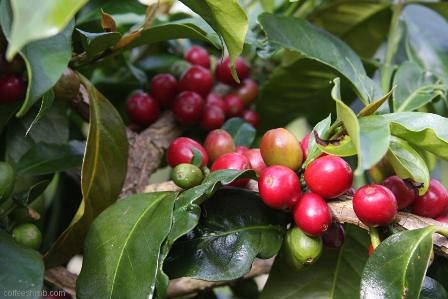
Brazilian bourbon coffee, beans, iron pickup or bourbon? Iron pickup coffee bean price
Iron pickup "Typica" iron pickup, the name sounds majestic and powerful, but in fact it is not so strong. It has a weak physique, poor disease resistance, easy to catch rust leaf disease, and produces less fruit. It is one of the oldest native varieties in Ethiopia, and many Arabica are derived from iron pickups! The parietal leaf of the iron pickup is bronzed, and the bean grain is large, pointed, oval or thin.
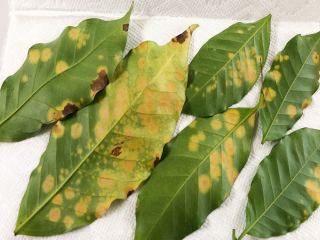
What disease is it easy to get from coffee trees? The introduction of coffee leaf rust, what kind of bug will eat coffee fruit?
Coffee trees are easily affected by many different pests and diseases, the two most common of which are leaf rust (leafrust) and coffee fruit coffeeberryborer (CBB). Leaf rust, known as roya in many Latin countries, is a fungal coffee.

Colombia coffee beans castillo coffee beans is what kind of varieties
Professional coffee knowledge exchange More coffee bean information Please pay attention to coffee workshop (Weixin Official Accounts cafe_style) Front Street-Castillo coffee variety introduction Since the 1950s, catura has been a very common variety in Colombia because its yield exceeds that of traditional iron pica or bourbon. However, while giving more yield, coffee leaves are equally susceptible

A brief introduction to the Origin, Development, History and Culture of Katim Fine Coffee beans suitable for Deep Baking
Catimor: in 1959, the Portuguese mixed Brazilian Kaddura and Timo to develop a disease-resistant Katim / Katimo, which is now an important variety of commercial beans. Coffee is a short-day plant. Coffee has the characteristics of multiple flowering and concentrated florescence. The florescence of small seed coffee in Yunnan is 27 months, and the flowering period is 35 months. The flowering of coffee is affected by the climate, especially the rain

Colombian coffee bean graded variety treatment planting historical manor distribution
For the exchange of professional baristas, please pay attention to the coffee workshop (Wechat official account cafe_style) varieties of Columbia beans with SUPERMO as the highest grade, followed by EXCELSO, but I'm afraid you need special grade coffee over size 18 (18cm 64 inches in diameter) in order to be included in the selection. Colombian coffee has a balanced flavor and a smooth taste, just like coffee.

Ethiopian coffee began to subdivide the varieties of Jiulumi, Degas and Walliso, respectively.
Ethiopian coffee varieties are often described as family heirlooms in recognition of their long history and to distinguish Ethiopia's production environment from other coffee producers that identify themselves as technology. Although Ethiopia has many mountain forests filled with wild coffee, most of the coffee grown and harvested for export today is selected or grown in some form. Essel out
Ethiopian coffee began to be subdivided into varieties of Jiulumi, Degas and Walliso.
Ethiopian coffee varieties are often described as family heirlooms in recognition of their long history and to distinguish Ethiopia's production environment from other coffee producers that identify themselves as technology. Although Ethiopia has many mountain forests filled with wild coffee, most of the coffee grown and harvested for export today is selected or grown in some form. Essel out

A brief introduction to the cultivation of Katim Blue Mountain Fine Coffee beans, Climate and altitude
Kartika/Bourbon hybridization, Kadika / bourbon mixture. Medium tall trees with slender leaves with red tips, coffee trees with the best shadows, usually big cherries. Producing areas: Aceh, Simalungun KOPI LUWAK civet coffee Kopi Luwak civets eat red coffee cherries, pulled out of the stool coffee beans, expensive. Typica: Essel

Colombian Coffee introduces the characteristics and Flavor to describe the Distribution of Variety planting areas
For the exchange of professional baristas, please follow the coffee workshop (Wechat official account cafe_style) A basic introduction to Colombian coffee volcanic soil + family operation Colombia is located in the northwest of the South American continent, bordering Panama in Central America. From the aerial view, it looks like it has been scratched by a cat on the west side, leaving three vertical paw marks from north to south. The famous producing areas of the country are scattered